
Nut Sort: Color Match Game
Greyfun GamesTrivia
4.9401.00 Reviews
- Version
- 1.25.0
- Installs
- 1.00M
- Age Rating
- Everyone
Screenshots
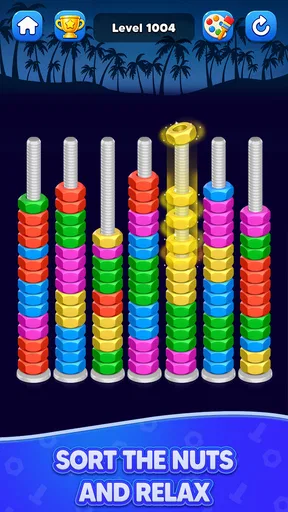
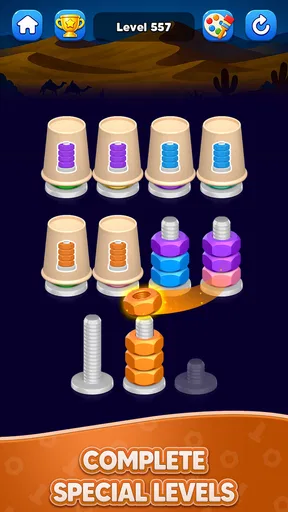
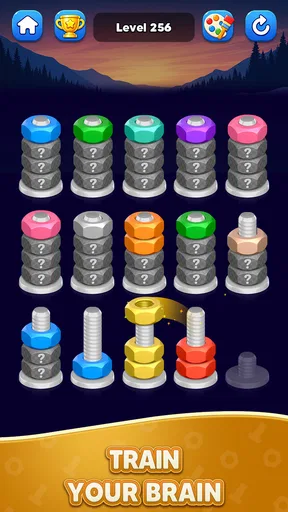

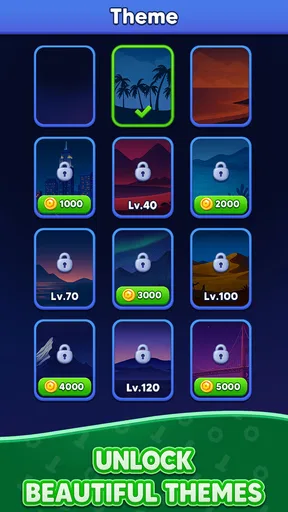
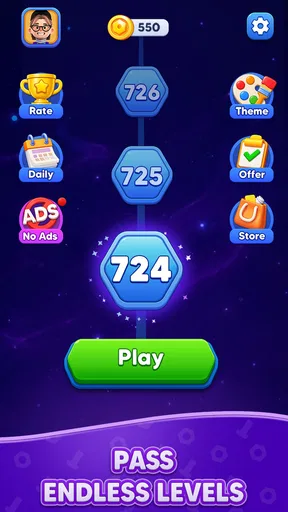

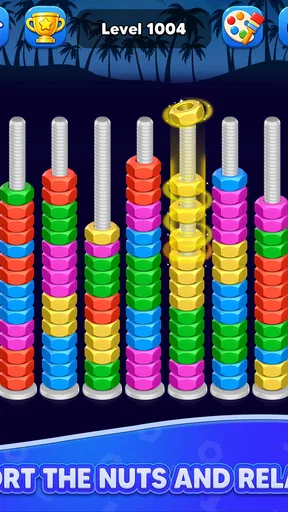
Our Review of Nut Sort: Color Match Game
 Analysis by Appyee
Nut Sort: Color Match Game is the kind of trivia-style puzzle I can open without preparing myself for a long session. Its central idea is easy to understand: organize colored nuts so that matching colors come together. That simplicity gives it an immediately relaxing feel, but the later decisions are less automatic than the first few boards suggest. I found myself switching between quick moves and slower planning depending on how crowded the puzzle became.
Greyfun Games presents it as a free game for everyone, and that description fits the approachable design. The game belongs to the casual brain-teaser side of the trivia category rather than the question-and-answer format many people associate with trivia. You are not testing facts; you are testing visual recognition, order planning, and patience. That difference matters when deciding whether it suits you.
Its store page describes more than 3,000 puzzles that can be played offline, which is a useful combination for short breaks, travel, or places where I do not want to depend on a connection. The game has passed a million installs and holds a 4.9 average from around 17,000 ratings, so it has clearly found a large audience. I would still treat those figures as a sign of broad appeal rather than a guarantee that every player will enjoy its pace.
My first impression of the puzzle flow
The first thing I noticed was how little explanation the concept needs. Colored pieces, containers, and open spaces communicate the objective faster than a long tutorial would. That directness is one of the strongest parts of the experience: I can begin making useful decisions almost immediately instead of learning a collection of special rules.
The visual language is deliberately gentle. Rounded shapes and clear color separation make the board readable at a glance, which is important for a puzzle that depends on noticing what can move and what should remain untouched. I never felt that the presentation was trying to compete with the problem itself. The decoration supports the sorting task instead of covering it.
That clean opening also reveals the main risk. If you want a game with a story, characters, exploration, or a changing setting, this is not aiming in that direction. The pleasure comes from arranging the board and watching confusion become order. For me, that made it a good companion during a coffee break, but not something I would choose when I wanted a richer fictional world.
The free entry point helps with that decision. I can try the basic loop without committing money first, while optional in-app purchases range from $0.99 to $38.99 per item. I would pay attention to those purchase prompts during longer sessions, especially if I were tempted to solve every difficult board quickly. The game is most appealing when I treat progress as the activity, not as something to rush past.
A setting built from order rather than story
There is no need for a dramatic setting to make these boards feel coherent. The containers, colored nuts, and empty spaces create a small visual world with one clear purpose: transform disorder into complete groups. That gives each level a quiet before-and-after rhythm. At the start, the arrangement looks tangled; by the end, the same limited space feels calm and resolved.
I like that the art direction does not pretend the puzzle is more complicated than it is. The colors carry much of the information, while the shapes and spacing keep the board from becoming a flat block of visual noise. This is especially useful when I play quickly, because the next possible move can be recognized without reading text or checking several menus.
Color-based puzzles do have a practical weakness. Players who have difficulty distinguishing similar shades may find some boards less comfortable than players with strong color vision. Clear separation helps, but it does not remove that concern entirely. I would recommend trying a few levels before settling into a long session if color recognition is a personal issue.
The age rating of Everyone also makes sense from the tone and subject matter. There is no intimidating theme to explain to a child, and the basic objective is understandable without advanced reading. Adults may enjoy it for the same reason: it asks for attention without demanding a heavy mental setup.
How the sound and rhythm shape a session
The strongest mood comes from the relationship between movement and pacing. Each successful placement gives the board a small sense of progress, and the overall rhythm encourages me to think in short sequences rather than stare at the entire puzzle as one impossible problem. I tend to make a move, reassess the remaining spaces, and then decide whether to continue or pause.
That rhythm is more important than it first appears. A sorting puzzle can become tiring if every action feels like a high-stakes commitment. Here, the relaxed presentation makes experimentation feel less severe, even when a careless move creates a difficult position. The result is a game I can play while winding down instead of one that demands the intensity of a timed arcade challenge.
I would not choose it for energetic entertainment. Its appeal depends on repetition, visual calm, and gradual resolution. Players who need constant surprises may find the sound and pacing too restrained. Players who like quiet concentration will probably understand the attraction quickly.
One useful habit is to use the rhythm as a warning system. If I start making moves without checking where a color will become trapped, I slow down rather than blaming the puzzle. The game rewards a measured tempo. In practice, taking a few seconds to inspect the available empty space is often more valuable than making several fast placements.
Why the mechanics fit the mood
The mechanics and presentation support each other because both focus on controlled improvement. The board begins in a state that looks untidy, and the player gradually creates clean groups. That visual change gives ordinary moves a satisfying purpose. I am not simply shifting pieces; I am reducing uncertainty one decision at a time.
The most important strategic idea is to protect flexibility. An empty container is not merely unused space; it is a tool that lets me separate colors, expose buried pieces, and avoid locking the board too early. When I spend that space carelessly, the puzzle becomes much harder. This is the kind of lesson that appears naturally through play instead of needing a long explanation.
A second useful approach is to look for colors that can be completed soon, but not at the cost of hiding another important piece. Completing one group feels productive, yet moving the wrong top piece may prevent access to the color needed next. I get better results when I consider the next two or three consequences rather than celebrating every immediate match.
That makes the game more thoughtful than a simple color-matching toy. It is still accessible, but the challenge comes from sequencing. I can play casually, then discover that a board requires a more deliberate plan. This gradual change in attention is one reason the large puzzle collection has practical value: the same basic interaction can serve both a quick break and a longer concentration session.
Offline play is another strong mechanical fit. Because the puzzle loop does not depend on other players or live events, being able to continue without a connection makes sense. I can use it on a journey, in a waiting room, or during a short pause at work without turning the session into a network check. That makes it more dependable than trivia games that need fresh questions or online competition to stay functional.
Where it differs from familiar alternatives
Compared with traditional trivia apps, this game does not measure knowledge, memory, or speed of recall. Someone who enjoys answering questions about history, sport, or entertainment may not find the same satisfaction here. Nut Sort is better suited to players who want a visual problem with a clear physical structure and no requirement to know a particular subject.
Compared with match-three games, it is also less about reacting to a changing board. There is no need to chase a chain of quick combinations in the same way. I have more time to inspect the arrangement, and the best move is often the one that preserves future options rather than the one that produces the most immediate visual effect.
Compared with classic logic puzzles, the color-and-container format is easier to approach but can feel narrower. A number puzzle or word puzzle may offer more variety in the kind of reasoning it demands. This game instead builds depth by rearranging one clear rule across many layouts. I would pick it for consistency and calm, not for broad intellectual variety.
It also differs from idle games because progress comes from my decisions rather than waiting for resources to accumulate. That makes a short session feel active even when the mood is quiet. If I only have a few minutes, I can still complete a meaningful part of a board instead of checking a timer and leaving.
Everyday use and practical habits
My favorite use case is the awkward gap between activities: waiting for an appointment, sitting on public transport, or taking a short break when I want something more engaging than scrolling. The offline design is particularly helpful in those moments. I can start a board without first finding a reliable connection, and the simple objective means I do not need to remember a story or recover from a complicated menu.
For a calmer evening session, I would avoid treating every level as a test of speed. I look at the board, identify the colors with the fewest safe destinations, and preserve empty space until I understand the arrangement. That small workflow reduces frustration and makes the relaxing tone feel earned rather than merely decorative.
Another practical tip is to stop after a difficult board instead of immediately forcing another attempt. Because the game uses a repeated visual structure, tired eyes can make similar colors and available spaces harder to judge. A short pause often improves my decisions more than trying to compensate with faster tapping.
Parents may appreciate the straightforward premise and Everyone rating, but I would still keep an eye on purchase prompts when a child is using a device. The game is free to start, while optional items can cost as much as $38.99. That does not make the game unsuitable for families, but it does make device-level purchase awareness sensible.
What the current version means for new players
The current version is 1.25.0, and the game was released on January 27, 2025. For someone installing it now, the important point is that this is a relatively recent puzzle title with a substantial audience already using it. The combination of a million-plus installs and a high average rating suggests that the basic loop is landing well with players.
I would not interpret the version number as a reason to expect a particular feature set beyond what is visible in the game. Instead, I would judge it by the qualities that matter during play: whether the colors are comfortable to distinguish, whether the board size feels readable on the phone, and whether the progression gives enough variation for your preferred session length.
The minimum operating-system requirement is Android 6.0, which keeps it accessible to many older Android devices. That is useful for a lightweight puzzle, although the actual comfort of play will still depend on screen size and touch responsiveness. On a small display, careful placement may feel less relaxed simply because the board has less room to inspect.
Who should play it, and who should skip it
I would recommend it to anyone who likes sorting, organizing, and quiet logic challenges. It is particularly suitable for players who want a game that can be paused mentally between moves, used offline, and enjoyed without learning a large rule system. It also works well for people who find satisfaction in visible progress: every completed group makes the board look more settled.
I would be more cautious recommending it to players who need narrative progression or constant mechanical novelty. If your ideal mobile game includes dialogue, exploration, competitive rankings, or rapid action, the restrained format may feel repetitive. A conventional trivia app is a better choice if your main goal is to test knowledge, while a match-three game may suit you better if you want faster visual feedback.
Players who dislike purchase prompts should also approach the free model with clear expectations. The initial price is free, but optional purchases are present. I would play normally first and decide whether the core progression is satisfying without spending. That keeps the choice tied to enjoyment rather than impatience on a difficult board.
My atmosphere verdict
What makes Nut Sort: Color Match Game work is not a single flashy feature. It is the consistency between its colors, containers, gentle rhythm, and gradual sense of order. The art direction gives the puzzle a recognizable mood, the pacing leaves room to think, and the mechanics provide enough planning to keep the task from becoming mindless.
There are limits. The visual language depends heavily on color, the repeated structure will not satisfy everyone, and players seeking factual trivia or story-driven variety should look elsewhere. The optional purchase range also deserves attention, especially on a shared family device. Those are real considerations, not reasons to dismiss the game.
For me, the best way to enjoy it is as a focused little reset: choose a board, protect empty space, plan beyond the next match, and stop when the concentration stops feeling pleasant. The large offline puzzle collection gives that routine room to continue, while the approachable presentation keeps the entry barrier low. If you want a calm sorting puzzle rather than a knowledge quiz or an action game, this is an easy recommendation to try for free.
Greyfun Games has kept the experience focused, and that focus is its greatest strength. I would not install it expecting a constantly changing world. I would install it when I wanted a clean visual problem, a steady pace, and the satisfying moment when a cluttered board finally makes sense.
Verdict
Strengths of Nut Sort: Color Match Game
- Simple sorting mechanics are easy to learn within a few seconds.
- Short levels make it convenient for quick breaks or casual play.
- Bright colors and clean visuals are comfortable to follow.
- Gradual difficulty increase keeps early gameplay accessible.
- Works well for players who enjoy calm, puzzle-focused challenges.
Limitations of Nut Sort: Color Match Game
- Later levels can feel repetitive once the sorting pattern becomes familiar.
- Some puzzles may rely more on trial and error than clear strategy.
- Frequent advertisements may interrupt the flow between levels.
- Limited gameplay variety can reduce long-term appeal for some players.
- Mistakes can be frustrating when a single move blocks the remaining solution.
Other Releases by Greyfun Games
View All
Classic Jigsaw
Trivia4.8

Jigsaw Puzzles - HD Adventure
Trivia4.8

Number Match: Train your brain
Trivia5.0

Find Differences: Spot it!
Trivia4.9
Similar Picks in This Category
View All
Millionaire 2026 Quiz & Trivia
Quiz & Trivia Games by Submarine Apps4.5

Brain Test 2: Tricky Stories
Unico Studio4.7

Trivia Crack: Brain Quiz Games
etermax4.4

QuizzLand. Quiz & Trivia game
Quiz & Trivia Games by Mno Go Apps4.8

Brain Test: Tricky Puzzles
Unico Studio4.7

Logo Quiz
bubble quiz games4.5
Frequently Asked Questions
What is Nut Sort: Color Match Game?
Nut Sort: Color Match Game is a casual color-sorting puzzle in which you organize differently colored nuts or pieces into matching containers. The objective is to plan each move carefully and group identical colors together, usually while working with limited space and a restricted number of moves. Its simple controls make it easy to start, but later levels require more thoughtful planning.
How do you play Nut Sort: Color Match Game?
Gameplay is based on selecting a nut, stack, or container and moving it to another available position according to the level’s rules. You must arrange pieces by color without blocking useful moves or filling containers in the wrong order. Before downloading, keep in mind that success depends mainly on forward planning, patience, and recognizing when a temporary move is necessary to solve the puzzle.
Is Nut Sort: Color Match Game free to download and play?
Nut Sort: Color Match Game is generally offered as a free download, allowing players to access the core puzzles without paying upfront. However, free puzzle games commonly include advertising, optional purchases, or paid features such as extra moves, hints, level assistance, or ad removal. Availability of specific offers may differ between Android and iOS and can change with updates.
Does Nut Sort: Color Match Game work offline?
Many of the main sorting puzzles can often be played without a continuous internet connection, which makes the game suitable for short sessions while traveling or when mobile data is unavailable. Nevertheless, an internet connection may be required for advertisements, cloud progress, special events, updates, or purchases. It is best to test offline access after installation because requirements can vary by version.
Is Nut Sort: Color Match Game suitable for children and casual players?
The game is easy to understand and does not usually require fast reactions, making it suitable for casual players and many children who enjoy logic puzzles. Still, parents should review the age rating, advertising content, and in-app purchase settings before allowing younger users to play. Difficulty can increase significantly, so some levels may require hints, retries, or considerable patience.
Play our best games!


